Description Of
FRP vs HDPE vs Stainless Steel – Which Acid Storage Tank is Best for You?
Choosing the right Acid Storage Tank is important for safe chemical storage, long equipment life, and lower maintenance costs. The three most common options are FRP (Fiber Reinforced Plastic), HDPE (High-Density Polyethylene), and Stainless Steel.
Each material has its own advantages, and the best choice depends on the type of acid, storage conditions, operating temperature, and your budget. FRP is one of the most preferred materials for an Acid Storage Tank because it offers excellent corrosion resistance and long-lasting performance.
It is lightweight, strong, and can safely store many industrial acids without being damaged by moisture or chemicals. FRP tanks require very little maintenance and are widely used in chemical plants, fertilizer industries, wastewater treatment facilities, and pharmaceutical companies.
Although the initial cost may be slightly higher than that of plastic tanks, the long service life makes FRP a cost-effective investment. HDPE tanks are another popular choice for storing acids. They are lightweight, easy to install, and more affordable than many other storage options.
HDPE provides good resistance to several industrial acids and works well for low- to medium-temperature applications. These tanks are commonly used in small and medium-sized industries where budget is an important factor. However, HDPE may not be suitable for very high temperatures or certain highly aggressive chemicals.
Stainless Steel tanks are known for their strength, durability, and ability to handle high temperatures. They are widely used in the pharmaceutical, food processing, and selected chemical industries. However, not every acid is compatible with stainless steel. Strong corrosive acids can damage the metal if the correct grade is not selected.
For this reason, chemical compatibility should always be checked before choosing a stainless steel tank. When selecting an Acid Storage Tank, consider the type of acid, its concentration, storage capacity, operating temperature, installation location, and future maintenance requirements.
If corrosion resistance and long service life are your main priorities, FRP is often the best choice. If you need an economical solution for compatible chemicals, HDPE is a practical option. If your application requires high mechanical strength and the stored acid is compatible, stainless steel can provide reliable performance.
There is no single storage tank that is perfect for every application. The ideal Acid Storage Tank depends on your industry's specific needs and the chemicals being stored. Consulting an experienced manufacturer or chemical storage expert will help you select the safest and most cost-effective solution.
Why Material Selection Matters for Acid Storage
Choosing the right material is one of the most important decisions when selecting an Acid Storage Tank. Different acids have different chemical properties, and not every material can safely store every type of acid.
Using the wrong material can lead to corrosion, leakage, contamination, and costly damage to equipment. The right material helps keep the stored chemical safe while improving the performance and lifespan of the tank.
Materials such as FRP (Fiber Reinforced Plastic), HDPE, polypropylene, and stainless steel are commonly used for manufacturing an Acid Storage Tank. Each material has its own strengths. FRP offers excellent corrosion resistance and a long service life.
HDPE is lightweight and suitable for many common acids. Stainless steel provides high strength but is only suitable for acids that are chemically compatible with the selected grade of steel. Temperature is another important factor when choosing the tank material.
Some acids are stored at higher temperatures, while others remain at normal room temperature. The material should be able to handle these conditions without losing its strength or chemical resistance. Storage capacity, installation location, and maintenance requirements should also be considered before making a final decision.
Selecting the right material for an Acid Storage Tank improves workplace safety, reduces maintenance costs, and lowers the risk of leaks or chemical accidents. It also helps maintain the quality of the stored acid and ensures reliable long-term performance.
By choosing a material that matches the chemical and operating conditions, industries can protect their equipment, employees, and the environment while achieving safe and efficient acid storage.
FRP (Fiber Reinforced Plastic) Acid Storage Tanks
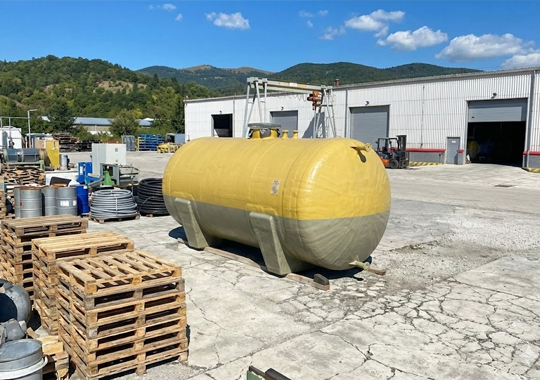
An Acid Storage Tank made from FRP (fiber-reinforced plastic) is one of the most trusted solutions for storing corrosive chemicals safely. FRP is manufactured by combining strong fiberglass with high-quality resin, creating a lightweight yet durable material that offers excellent resistance to corrosion and chemical attack.
Many industries choose an FRP Acid Storage Tank because it performs well even in harsh working environments. It can safely store chemicals such as sulphuric acid, hydrochloric acid, phosphoric acid, and many other corrosive liquids when designed for the specific application.
The tank does not rust like ordinary metal tanks and requires very little maintenance, helping businesses reduce long-term operating costs. Another major advantage of an FRP Acid Storage Tank is its long service life.
With proper installation and regular inspections, these tanks can provide reliable performance for many years. They are also available in different sizes and designs to meet the storage needs of chemical plants, fertilizer industries, pharmaceutical companies, wastewater treatment facilities, and other industrial sectors.
FRP tanks are easy to install because they are lighter than many metal storage tanks. Their strong construction also helps reduce the risk of leaks and corrosion, improving workplace safety and protecting valuable chemicals from contamination.
Advantages
An FRP Acid Storage Tank offers many advantages for industries that need safe and reliable chemical storage. One of its biggest benefits is excellent corrosion resistance, which protects the tank from damage caused by strong acids and harsh chemicals.
Another advantage is its lightweight construction. An FRP Acid Storage Tank is easier to transport and install than many metal tanks, helping reduce installation time and labour costs. It also has a long service life and requires very little maintenance, making it a cost-effective solution over the years.
FRP tanks are available in different sizes and designs, allowing industries to choose a tank that matches their storage requirements. Their strength, durability, and dependable performance make them a preferred choice for many industrial applications.
Limitations
Although an FRP Acid Storage Tank provides many benefits, it also has some limitations. The tank must be designed for the specific acid and operating temperature because different chemicals require different resin systems. Using an incorrect resin may reduce the tank's performance and lifespan.
FRP tanks should also be manufactured by experienced professionals to ensure proper quality and durability. Poor manufacturing or incorrect installation can affect the strength of the tank and increase maintenance requirements.
Regular inspections are recommended to check the condition of the tank and identify any signs of wear. When properly designed and maintained, an FRP Acid Storage Tank delivers reliable and long-lasting performance.
Best Applications
An FRP Acid Storage Tank is ideal for industries that regularly store corrosive chemicals. It is widely used in chemical processing plants, fertilizer manufacturing units, pharmaceutical industries, metal treatment facilities, and wastewater treatment plants.
These tanks are suitable for storing many industrial acids, including hydrochloric acid, sulphuric acid, phosphoric acid, and other corrosive liquids. Their excellent corrosion resistance and long service life make them a dependable solution for demanding industrial environments.
Businesses that require safe chemical storage with low maintenance often choose an FRP Acid Storage Tank because it provides reliable protection while reducing long-term operating costs.
HDPE/LLDPE Acid Storage Tanks
HDPE (High-Density Polyethylene) and LLDPE (Linear Low-Density Polyethylene) tanks are popular choices for storing many industrial acids. These plastic tanks are lightweight, corrosion-resistant, and easy to install. They are commonly used in industries that require an affordable and dependable Acid Storage Tank for everyday chemical storage.
HDPE and LLDPE tanks are available in different capacities and designs, making them suitable for both small and large industrial applications. Their smooth inner surface also helps reduce maintenance and makes cleaning easier.
Advantages
An HDPE or LLDPE Acid Storage Tank offers several practical benefits. It provides good resistance to many corrosive chemicals and does not rust like metal tanks. The lightweight design makes transportation, handling, and installation simple and cost-effective.
These tanks require very little maintenance and are generally more affordable than many other storage options. Their durability and chemical resistance make them suitable for a wide range of industrial applications where moderate operating temperatures are involved.
Many businesses choose HDPE or LLDPE tanks because they provide a reliable balance between performance, safety, and cost.
Limitations
An HDPE or LLDPE Acid Storage Tank also has certain limitations. These tanks are not suitable for all acids, especially those stored at very high temperatures or under demanding pressure conditions. Some aggressive chemicals may also require a different tank material for long-term storage.
Compared to FRP, plastic tanks may have lower structural strength in certain heavy-duty industrial applications. For this reason, selecting the correct tank depends on the chemical type, storage conditions, and operating environment.
Before purchasing an HDPE or LLDPE Acid Storage Tank, industries should always confirm chemical compatibility with the manufacturer.
Best Applications
An HDPE or LLDPE Acid Storage Tank is best suited for industries that store compatible acids at normal or moderate temperatures. These tanks are widely used in water treatment plants, chemical storage facilities, electroplating units, textile industries, food processing plants, and small to medium manufacturing units.
They are also suitable for storing cleaning chemicals, industrial solutions, and many common acids where lightweight construction and affordability are important. Businesses looking for an economical and easy-to-maintain storage solution often select HDPE or LLDPE tanks for their daily industrial operations.
Stainless Steel Acid Storage Tanks
A stainless steel Acid Storage Tank is a strong and durable storage solution used in industries where high mechanical strength and reliable performance are required. These tanks are manufactured using high-quality stainless steel grades that can safely store certain acids and industrial chemicals.
However, not every acid is suitable for stainless steel, so chemical compatibility should always be checked before selecting this type of tank. One of the main advantages of a stainless steel Acid Storage Tank is its excellent structural strength.
It can withstand heavy loads, high pressure, and elevated temperatures better than many other storage materials. This makes it suitable for industries that operate under demanding conditions. Stainless steel tanks are also easy to clean, making them a preferred choice for applications where cleanliness and hygiene are important.
These tanks are commonly used in pharmaceutical companies, food and beverage industries, petrochemical plants, and selected chemical processing facilities. They are also suitable for storing chemicals that do not react with stainless steel.
Choosing the correct grade, such as SS304 or SS316, depends on the type of chemical and the working environment. Although a stainless steel Acid Storage Tank offers excellent durability, it is generally more expensive than FRP or HDPE tanks.
It may also require additional protection or special grades when storing highly corrosive acids. For this reason, consulting an experienced manufacturer is important before making a final decision.
When selected for the right application, a stainless steel Acid Storage Tank provides long service life, dependable performance, and excellent strength. With proper maintenance and regular inspections, it offers a safe and reliable solution for storing compatible industrial chemicals.
Advantages
A stainless steel Acid Storage Tank offers several advantages for industries that require a strong and reliable storage solution. One of its biggest benefits is its high mechanical strength.
Stainless steel can handle heavy loads, high pressure, and demanding industrial conditions without losing its structural stability. Another advantage is its ability to perform well at higher temperatures compared to many plastic storage tanks.
A stainless steel Acid Storage Tank is also easy to clean because of its smooth surface, making it suitable for industries where cleanliness is important. With proper maintenance, these tanks can provide many years of dependable service.
When the correct grade of stainless steel is selected for a compatible chemical, the tank offers excellent durability and reliable performance. This makes it a trusted choice for many industrial applications that require both strength and long-term value.
Limitations
Although a stainless steel Acid Storage Tank has many benefits, it also has some limitations. The most important limitation is chemical compatibility. Not all acids can be safely stored in stainless steel because some highly corrosive acids may react with the metal and cause corrosion or damage.
Another limitation is the higher initial cost. Stainless steel tanks are generally more expensive than FRP or HDPE tanks. They are also heavier, which can increase transportation and installation costs.
To ensure safe operation, businesses should carefully check whether the selected grade of stainless steel is suitable for the acid being stored. Choosing the wrong material can reduce the tank's lifespan and increase maintenance requirements.
Best Applications
A stainless steel Acid Storage Tank is best suited for industries where high strength, durability, and clean storage conditions are required. These tanks are widely used in pharmaceutical manufacturing, food and beverage processing, petrochemical plants, and selected chemical industries that store compatible acids.
They are also suitable for applications involving higher operating temperatures or where strong structural performance is important. When the stored chemical is compatible with stainless steel, the tank provides reliable storage with excellent long-term performance.
Businesses that require a combination of mechanical strength, easy maintenance, and long service life often choose a stainless steel Acid Storage Tank. Selecting the correct stainless steel grade and following proper maintenance practices helps ensure safe chemical storage and dependable industrial operations.
Quick Comparison Table – FRP vs HDPE vs Stainless Steel
Choosing the right Acid Storage Tank depends on the type of acid, storage conditions, operating temperature, budget, and maintenance requirements. FRP, HDPE, and Stainless Steel are the three most commonly used materials, and each has its own advantages.
Understanding their differences helps industries select the best storage solution for safe and long-lasting performance. An FRP Acid Storage Tank is widely preferred because it offers excellent corrosion resistance and a long service life. It can safely store many corrosive acids without rusting or losing its strength.
FRP tanks are lightweight, require very little maintenance, and are suitable for industries such as chemical processing, fertilizer manufacturing, pharmaceuticals, and wastewater treatment. Although the initial investment may be slightly higher than HDPE, their durability makes them a cost-effective choice over time.
An HDPE or LLDPE Acid Storage Tank is a good option for industries looking for an economical and lightweight storage solution. These tanks provide good resistance to many industrial acids and are easy to install and maintain.
They are commonly used for low- to medium-temperature applications. However, they may not be suitable for certain highly corrosive chemicals or very high operating temperatures. A Stainless Steel Acid Storage Tank is known for its high strength, durability, and ability to withstand higher temperatures.
It is commonly used in the pharmaceutical, food processing, and selected chemical industries where the stored acid is compatible with stainless steel. However, not all acids can be safely stored in stainless steel, so checking chemical compatibility before selection is essential.
Overall, if corrosion resistance and long-term performance are the main priorities, FRP is often the best choice. If affordability and lightweight construction are more important, HDPE is a practical option.
If the application requires high mechanical strength and the acid is compatible, stainless steel can provide reliable and durable performance. Selecting the right Acid Storage Tank based on the chemical and operating conditions helps improve safety, reduce maintenance costs, and ensure efficient industrial operations.
Additional Factors to Consider When Choosing an Acid Tank
Choosing the right Acid Storage Tank involves more than just selecting the material. Several important factors should be considered to ensure safe storage, reliable performance, and a longer service life. Taking the time to evaluate these factors helps industries avoid future problems and reduce maintenance costs.
The first factor is the type and concentration of the acid. Every acid reacts differently with storage materials, so the tank must be compatible with the chemical being stored. The storage capacity is also important.
The Acid Storage Tank should be large enough to meet current production needs while allowing room for future expansion if required. Operating temperature and pressure should also be considered before selecting a tank.
Some industrial processes involve higher temperatures, so the tank material must be able to perform safely under those conditions. The installation location is another key factor. Available space will determine whether a vertical or horizontal tank is the better choice.
Safety features should never be overlooked. A quality Acid Storage Tank should include leak-proof construction, proper venting, overflow protection, secure pipe connections, and easy inspection access. These features help protect workers, equipment, and the environment from chemical leaks and accidents.
Maintenance requirements are equally important. Choosing a tank that is easy to inspect, clean, and maintain helps reduce downtime and improves long-term performance. Finally, always select an Acid Storage Tank from a trusted manufacturer that follows industry quality standards.
Acid Concentration & Temperature
The concentration of the acid and the operating temperature are two of the most important factors when selecting an Acid Storage Tank. Different acids behave differently depending on their strength and temperature.
A material that works well for a diluted acid may not be suitable for the same acid at a higher concentration. Similarly, some tank materials perform well at normal temperatures but may lose their strength when exposed to excessive heat.
Before choosing an Acid Storage Tank, businesses should understand the chemical properties of the acid they plan to store. Selecting the right material helps prevent corrosion, leakage, and damage to the tank.
It also improves safety and extends the service life of the storage system. Consulting the manufacturer for chemical compatibility is always recommended to ensure the tank performs safely under the required operating conditions.
Tank Capacity Requirements
Selecting the correct size of an Acid Storage Tank is essential for smooth industrial operations. A tank that is too small may require frequent refilling, while a tank that is much larger than needed can increase installation and maintenance costs.
Choosing the right capacity helps improve storage efficiency and supports continuous production. When deciding the tank size, industries should consider daily chemical usage, future expansion plans, available installation space, and emergency storage needs.
A properly sized Acid Storage Tank also makes chemical handling easier and reduces unnecessary operational interruptions. Planning for future production growth can help avoid replacing the tank later.
Regulatory Compliance
Every industry must follow safety and environmental regulations when storing corrosive chemicals. A properly designed Acid Storage Tank should meet applicable industry standards and safety requirements to protect workers, equipment, and the environment.
Important safety features such as leak-proof construction, proper venting, secure pipe connections, overflow protection, and regular inspections help businesses comply with industrial regulations. Following these guidelines reduces the risk of accidents, environmental contamination, and legal issues.
Choosing a certified and well-manufactured Acid Storage Tank gives industries greater confidence that their chemical storage system meets required quality and safety standards.
Budget & Long-Term ROI
Cost is an important consideration when selecting an Acid Storage Tank, but the lowest purchase price is not always the best choice. Businesses should consider the total cost over the entire life of the tank, including installation, maintenance, repairs, and replacement costs.
A high-quality Acid Storage Tank made from suitable materials may have a higher initial price, but it often provides a longer service life and lower maintenance expenses. This reduces unexpected repairs and improves overall operating efficiency.
Investing in a durable and reliable Acid Storage Tank offers better long-term value by improving safety, reducing downtime, and extending equipment life. Looking at the long-term return on investment instead of only the purchase cost helps businesses make a smarter and more economical decision.
Frequently Asked Questions (FAQs)
1. Which material is best for an Acid Storage Tank?
The best Acid Storage Tank material depends on the type of acid, its concentration, and the operating temperature. FRP is widely preferred because it offers excellent corrosion resistance and a long service life. HDPE is a good choice for many standard applications, while stainless steel is suitable only for acids that are compatible with the selected steel grade.
2. How long does an Acid Storage Tank last?
A high-quality Acid Storage Tank can last between 10 and 20 years or even longer with proper installation, regular inspections, and timely maintenance. The lifespan also depends on the stored chemical and operating conditions.
3. Can one Acid Storage Tank store different acids?
It is not recommended to use the same Acid Storage Tank for different acids unless the tank is specifically designed and cleaned for that purpose. Different chemicals may react with each other or affect the tank material.
4. Why is corrosion resistance important?
Corrosion resistance protects the Acid Storage Tank from chemical damage, prevents leaks, and extends its service life. It also helps maintain workplace safety and reduces maintenance costs.
5. What safety features should an Acid Storage Tank have?
A good Acid Storage Tank should include leak-proof construction, proper venting, overflow protection, secure pipe connections, and easy inspection access. These features help ensure safe and reliable chemical storage.
6. How do I choose the right Acid Storage Tank?
When selecting an Acid Storage Tank, consider the type of acid, concentration, storage capacity, operating temperature, installation space, and industry safety requirements. Choosing a trusted manufacturer also helps ensure long-term performance and safe chemical storage.
Enquire Now