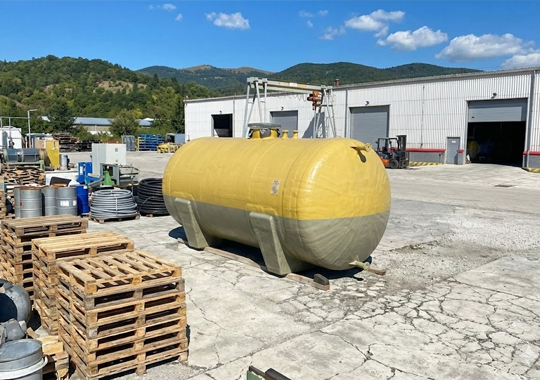
Description Of
Industrial Design Requirements for HCL Storage Tanks: Vapor Control & Secondary Containment
Proper safety measures are very important for every HCL storage tank system to protect workers, equipment, and the environment. Hydrochloric acid produces harmful fumes and can cause serious corrosion if safety systems are not properly maintained.
Industries must follow proper guidelines for ventilation, secondary containment, and fume control to ensure safe chemical storage. Ventilation plays an important role in every HCL storage tank setup.
A proper ventilation system helps remove harmful acid fumes from the storage area and improves workplace safety. Good airflow also helps reduce corrosion around nearby equipment and structures. Secondary containment is another important safety feature for an HCL storage tank.
It is designed to hold leaked chemicals in case of tank damage or overflow. This protective system helps prevent soil contamination, chemical spreading, and workplace accidents. Many industries use RCC containment pits or chemical-resistant containment systems for additional protection.
Fume scrubbers are also commonly used with HCL storage tank systems to control acid vapors. Proper fume scrubber sizing helps remove harmful fumes before they are released into the environment. This improves worker safety and helps industries maintain environmental compliance.
Vapor Management Strategy for HCL Storage Tank Systems
Proper vapor management is very important for every HCL storage tank system. Many industries make the mistake of using standard venting systems without understanding the pressure created by hydrochloric acid vapors.
Standard venting often fails because HCl fumes continuously generate pressure inside the tank, especially during filling, temperature changes, and chemical reactions. An HCL storage tank must have properly sized vents to safely handle vapor flow, pressure stress, and backpressure.
If the vent size is too small, harmful pressure can build inside the tank. This may cause tank deformation, leakage, damage to fittings, or even serious safety risks. Poor vent design can also affect the performance of connected fume scrubbers and vapor control systems.
A proper vapor management strategy helps maintain safe internal tank pressure and supports smooth airflow during operation. Many industries use corrosion-resistant vent systems and correctly sized piping to improve safety and reduce equipment stress.
For long-term performance, every HCL storage tank should be designed with proper vent calculations, pressure control systems, and reliable vapor handling solutions. Good vapor management improves worker safety, protects equipment, and helps maintain safe chemical storage conditions in industrial environments.
The Risk of Metal Exposure in HCL Storage Tank Systems
Metal exposure is one of the biggest problems in many traditional HCL storage tank designs. In standard vertical tank configurations, exterior metal fittings, supports, and connections are often exposed to hydrochloric acid vapors.
Over time, these acid fumes slowly damage metal parts through corrosion, rust, and chemical reaction. This can lead to leakage, equipment failure, higher maintenance costs, and serious safety risks in industrial environments.
An HCL storage tank with poor drainage design can also allow acid residue to settle at the bottom of the tank. This increases the chances of corrosion around fittings and connected pipelines. Many industries face repeated repair work because traditional flat-bottom systems do not fully remove stored chemicals during cleaning or discharge.
Custom-sloped bottom designs help reduce these maintenance problems. A sloped bottom allows complete liquid drainage, reduces chemical buildup, and improves cleaning efficiency. This design also lowers the risk of acid contact with exposed metal components and helps improve overall tank safety.
Using corrosion-resistant materials along with improved HCL storage tank designs can reduce maintenance hazards, improve equipment life, and provide safer long-term chemical storage for industrial applications.
Secondary Containment Architecture for HCL Storage Tank Safety
Secondary containment architecture is an important safety feature for every HCL storage tank system. It helps protect workers, equipment, and the environment in case of accidental tank leakage or structural failure.
Proper containment systems are designed to safely collect leaked hydrochloric acid before it spreads outside the storage area. One commonly used solution is the “tank-in-a-tank” design. In this system, the main HCL storage tank is placed inside another protective outer tank.
If the inner tank leaks, the outer tank safely holds the chemical and prevents environmental contamination. This design provides extra protection and reduces safety risks in industrial operations.
Another widely used method is chemical-resistant perimeter dikes. These dikes are protective barriers built around the HCL storage tank area to contain leaked acid safely. They are usually made from concrete with chemical-resistant coatings or corrosion-resistant materials. Perimeter dikes help stop acid from spreading into nearby work areas, drainage systems, or soil.
A properly designed secondary containment system improves industrial safety, reduces environmental hazards, and supports safe long-term chemical storage. Many industries use these systems to meet safety standards and protect their HCL storage tank operations from accidental chemical leaks.
Fume Scrubbing for HCL Storage Tank Safety
Fume scrubbing is an important part of every HCL storage tank system because hydrochloric acid releases harmful vapors during storage and handling. These hydrogen chloride fumes can create serious safety risks for workers and may also damage nearby equipment through corrosion.
A proper fume scrubbing system helps control and neutralize these vapors before they are released into the environment. Modern HCL storage tank systems often use automated pH monitoring technology inside the fume scrubber unit.
This system continuously checks the pH level of the neutralizing solution used to treat acid vapors. When the pH level changes, the system automatically adjusts the chemical dosing to maintain proper neutralization performance.
Automated pH monitoring improves the efficiency of fume scrubbing by reducing manual checking and ensuring stable operation. It also helps industries maintain environmental safety and workplace protection more effectively. Many chemical plants, water treatment facilities, and industrial processing units use these systems to improve vapor control and reduce maintenance problems.
A properly designed fume scrubbing system for an HCL storage tank helps improve worker safety, reduce corrosion risks, and support safe long-term chemical storage operations.
Enquire Now